
Mostov DJ Services LLC
Music Tips and Tricks for Your Dance Floor
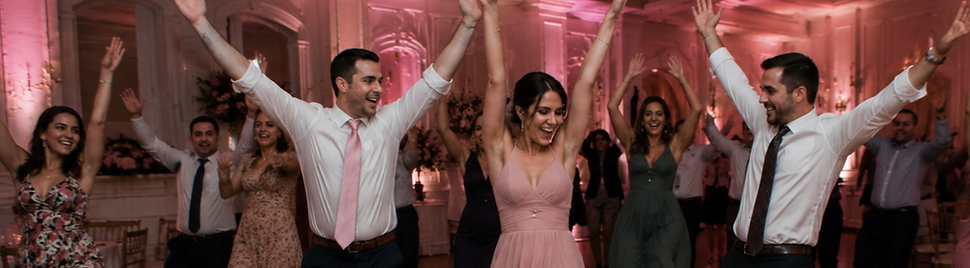
"YMCA" — Sometimes the most familiar songs create the most unforgettable moments.
Building a Dance Floor People Want to Join
Music is one of the most powerful emotional forces at any wedding reception. Long after the flowers have wilted, the tables have been cleared, and the decorations have been packed away, couples often remember their wedding through music first. A song can instantly transport people back to a specific moment from the evening: the excitement of the bridal party introductions, the emotion of the first dance, the laughter during a line dance, the chaos of a singalong, or the final slow dance before the lights came up and the night quietly came to an end. Music shapes atmosphere. It shapes pacing. It shapes emotional memory. And because of that, wedding music is far more important — and far more complicated — than many people initially realize.
In fact, weddings are the most difficult events to DJ properly because you need to know a lot of music. Unlike clubs, concerts, bars, school dances, or private parties built around a specific demographic, weddings bring together people from completely different generations, personalities, backgrounds, cultures, and musical tastes all in the same room at the same time. Grandparents, teenagers, college friends, coworkers, neighbors, childhood friends, parents, former classmates, and extended family members all arrive carrying different ideas about what makes a great party. Some guests want to dance immediately. Others need time. Some love country music. Others prefer hip-hop, classic rock, Motown, disco, 90s pop, pop punk, R&B, indie music, Broadway soundtracks, or music from entirely different cultural traditions. Some guests know every lyric to the biggest wedding standards. Others would rather hear deep cuts no one else recognizes. Balancing all of those personalities within a single evening is what makes weddings uniquely challenging.
Many DJs rely heavily on online lists of “Most Requested Wedding Songs.” Those lists are everywhere, including on the Suggested Songs page of my own website. In fairness, the songs on those lists became popular for a reason. Most are classics that have largely stood the test of time because they create familiarity and participation very quickly. But relying on those lists too heavily can also create receptions that feel strangely interchangeable. You may have attended weddings where it felt like you were hearing the exact same soundtrack over and over again regardless of who was actually getting married. The songs worked, technically speaking, but the music never truly reflected the personalities of the couple standing at the center of the room.
I approach weddings very differently because I do not believe all weddings should sound the same. No two couples are identical, so no two receptions should feel identical either. Some couples want nonstop energy from the moment dancing begins until the final song of the night. Others prefer a more balanced reception where conversation, atmosphere, and emotional moments matter just as much as crowd participation. Some couples care deeply about music and spend months carefully selecting meaningful songs. Others simply want to know their guests are having a wonderful time and trust me to guide the evening naturally. Neither approach is wrong. The goal is not to force every wedding into the same mold. The goal is to create a soundtrack that feels personal to you while still giving your guests every reason to celebrate with you.
That balancing act is where wedding DJing becomes an art instead of simply a playlist. One of the biggest misconceptions couples sometimes have is believing that a successful wedding soundtrack is merely a collection of their favorite songs. In reality, building a dance floor is far more complicated than that. A great reception depends on pacing, familiarity, timing, atmosphere, emotional awareness, crowd psychology, flexibility, and intuition. Your favorite songs absolutely deserve to be part of your celebration, but there is also a difference between music people love privately and music that creates shared participation publicly. Some songs invite people into the experience immediately. Others unintentionally isolate the room. Understanding the difference matters.
For some couples, music is simply background entertainment. For others, it is one of the defining centerpieces of the entire reception experience. If music matters deeply to you, then this page is designed to help you better understand how wedding dance floors actually work, why certain songs succeed while others struggle, and how thoughtful planning can dramatically change the energy of your reception. I also want to pull back the curtain a bit and share some of the techniques, philosophies, observations, and strategies I use behind the scenes while building a dance floor throughout the evening. The goal is not to overwhelm you with rules. The goal is to help you better understand what makes your wedding unique and how music can strengthen that uniqueness instead of working against it.
You have chosen a DJ who believes weddings deserve individual attention, emotional investment, careful preparation, and genuine care. Your playlist deserves that same level of thoughtfulness. So together, let’s work to make your soundtrack every bit as memorable as the people who will dance to it.
“How Much Music Should I Choose, and How Much Should I Let You Choose?”
Couples ask me this question all of the time, and the honest answer is that it depends entirely on what kind of experience you want to create. Some couples want to be heavily involved in every musical decision from beginning to end. Others simply want to provide a few preferences and trust me to guide the evening naturally. Both approaches can work beautifully. There is no single “correct” way to build a wedding soundtrack because every couple values different things emotionally, socially, and musically.
What I always encourage couples to remember, however, is that flexibility matters far more than most people realize. Wedding receptions are fluid environments. Energy changes constantly throughout the night. Guests arrive at the dance floor in waves. Some songs unexpectedly explode with enthusiasm while others quietly empty the room. Certain groups of guests become energized at different points in the evening. Older guests often participate early. Younger guests may take over later. Some crowds respond immediately to nostalgia. Others need modern music first before they feel comfortable enough to fully engage. Every room develops its own personality over time, and the ability to adapt to that personality in real time is one of the most important skills a wedding DJ can possess.
That is why I generally caution couples against scripting every musical moment too rigidly. If your playlist leaves me no “wiggle room” to respond to the room naturally, then one of my greatest strengths — musical knowledge — becomes far less useful. A professional wedding DJ is not simply someone who owns speakers and plays songs. A professional wedding DJ understands pacing, transitions, crowd behavior, emotional momentum, and how different genres, tempos, and eras interact with different groups of people over the course of an evening. The more flexibility I have to respond to your guests organically, the easier it becomes to create a dance floor people genuinely want to join.
In our meetings and conversations, we will spend a great deal of time discussing your music tastes and preferences. The reception planner you complete for me also helps me understand what you love, what you dislike, what songs matter emotionally to you, and what styles you absolutely do not want included. I spend weeks preparing music for every wedding I DJ so that I arrive ready to build a soundtrack around your personalities instead of relying on generic playlists. I absolutely encourage you to personally select songs for the bridal party introductions, your first dance, parent dances, the cake cutting, bouquet toss, garter removal, anniversary dance, and final song of the night. Those moments become emotional landmarks in your memory, and the songs attached to them should hold genuine meaning for the two of you.
When it comes to open dancing, however, I generally recommend a more balanced approach. In most cases, selecting roughly 15 to 20 “must play” songs and providing a detailed “do not play” list creates the strongest results. Your “must plays” tell me what absolutely matters to you emotionally. Your “do not plays” help me avoid music that would negatively affect your enjoyment of the evening. Beyond that, leaving room for adaptation allows me to shape the dance floor around the guests actually participating in real time.
One of the most common planning mistakes couples make is dramatically underestimating how much time music actually requires. On average, most receptions realistically accommodate approximately 15 to 20 songs per hour depending on the pacing of the evening, transitions, announcements, slow dances, special moments, and crowd interaction. Yet many couples provide four or five hours worth of “must play” requests for receptions that only include two or three hours of dancing. Once guest requests, pacing adjustments, slow songs, transitions, and spontaneous moments enter the equation, fitting every request into the evening becomes mathematically impossible.
Prioritization matters. The strongest reception playlists are not necessarily the longest playlists. They are the most intentional playlists.
Your Playlist Options
There are several different ways couples can approach reception music planning, and each comes with advantages and limitations depending on your personalities, priorities, and comfort level.
The first option is to do very little at all and allow me to build the soundtrack almost entirely from scratch. This works surprisingly well for couples who either trust my experience completely or simply do not have the time or desire to spend months building playlists themselves. Because I DJ weddings and events constantly, I develop a strong understanding of how crowds respond to different genres, eras, tempos, transitions, and moments throughout the evening. I am able to recognize patterns quickly, adapt naturally, and shape the energy of the reception around the personalities in the room. Couples who choose this option are often less concerned with controlling every song and more concerned with trusting the overall experience.
The second option — and generally the strongest approach in my experience — is a middle-ground philosophy. This involves providing favorite songs, favorite artists, genres you enjoy, meaningful requests, and a detailed “do not play” list while still allowing me enough flexibility to guide the evening organically. This approach gives me a clear understanding of your personalities and preferences while still allowing me to read the room, respond to guest energy, take selective requests, and build momentum naturally throughout the night. Most of the strongest wedding dance floors I have ever experienced were built through collaboration rather than rigid control.
The third option is to provide an approved master playlist and request that only songs from that list be played throughout the reception. This approach guarantees complete control over the soundtrack, which some couples strongly prefer. There is certainly nothing wrong with wanting that level of oversight. But couples should also understand the limitations it creates. Restricting the soundtrack too tightly removes spontaneity, limits adaptability, reduces guest interaction, and prevents me from pivoting naturally if the room’s energy changes unexpectedly. Weddings are living social environments. Crowds do not always respond the way couples imagine they will weeks or months in advance.
The final option is one I strongly discourage: creating a fully scripted playlist in exact sequential order and requiring the reception to follow it rigidly from beginning to end. While understandable in theory, this approach usually creates more stress than success. Receptions are unpredictable by nature. Guests respond emotionally in real time, not according to a spreadsheet created months earlier. A song that feels perfect while planning may feel completely wrong in the moment depending on the room’s energy, participation level, alcohol consumption, emotional tone, timeline delays, or countless other variables. Micro-managing the entire reception soundtrack often prevents natural momentum from developing and can unintentionally drain energy from the room instead of building it. The strongest receptions almost always leave room for intuition, flexibility, spontaneity, and adaptation.
Tips for Your Dance Floor
1. Not All Music Is Danceable
One of the first things every couple should decide is what they want their reception music to do. That may sound simple, but it is one of the most important questions in the entire planning process. Do you want music to create atmosphere? Do you want it to reflect your personal taste? Do you want it to entertain your guests? Do you want it to fill the dance floor and keep people there? In a perfect world, your reception music does all of those things at once, but the reality is that different parts of the evening serve different purposes. Cocktail hour and dinner are wonderful times to showcase your favorite artists, meaningful songs, obscure gems, acoustic versions, indie favorites, film scores, Broadway selections, country ballads, deep cuts, or anything else that helps the room feel like you. Once the dance floor opens, however, the purpose of the music usually changes. At that point, the music is no longer simply decorating the room. It is asking people to stand up, move their bodies, let go of self-consciousness, and join the celebration.
That distinction matters because not all music is danceable, and not every song people love privately works well in a public reception setting. In 28 years behind the booth, I have received countless playlists that were deeply personal, highly specific, and almost entirely unfriendly to a wedding dance floor. I once received a couple’s playlist built around the collected works of The Smiths. Another couple requested more than 30 songs from Disney animated films. Still another packed their playlist with death metal. I am not judging any of those choices. Every couple has the right to love what they love, and I will always respect the music that matters to the people who hire me. But there is a difference between music that represents your personality and music that creates participation. A reception dance floor is not a pair of headphones. It is a shared social space, and the songs played during open dancing need to give guests a reason to feel comfortable joining it.
Some couples do not dance, and because they do not dance, they understandably do not always think very much about the dance floor. If background music is your preference, I will happily oblige. It is your wedding, and I will always provide music that reflects your wishes. But it is important to remember that most wedding guests arrive expecting some kind of celebration. They have dressed up, driven to the venue, brought a gift, sat through the ceremony, enjoyed dinner, and waited for the moment when the room finally shifts from formal reception to actual party. Once the dance floor opens, you should strongly consider using that portion of the evening for the enjoyment of your guests, even if dancing is not personally your favorite thing. That is one of the reasons you hired a professional DJ in the first place. If the goal were only to play a private playlist from beginning to end without regard for the room, plugging Spotify into a pair of speakers would have cost a lot less money.
2. There Is Comfort in Knowing the Music That Is Played
Sometimes couples choose music even I do not know. That is rare, but it happens. Usually, those couples are not trying to create a traditional wedding dance floor as much as they are trying to demonstrate the range, uniqueness, or eccentricity of their musical taste. I understand that impulse completely. Music is personal. It becomes part of identity. The songs we love often say something about who we are, where we have been, what we survived, what we value, and what we want others to know about us. When couples care deeply about music, they often want the reception to reflect that depth. I respect that. I appreciate that. And I will absolutely help couples include music that feels personal, meaningful, and specific to them.
But I also try to be honest about what happens when guests do not recognize the music being played. Most people do not dance because a song is objectively good. They dance because a song makes them feel safe enough, excited enough, nostalgic enough, or connected enough to move in front of other people. Familiarity creates comfort. Comfort creates confidence. Confidence creates participation. When guests hear a song they know, they have an immediate relationship with it. They remember where they first heard it. They know when the chorus is coming. They know the hook. They know the words. They know whether it is silly, romantic, dramatic, or explosive. That recognition lowers the emotional barrier between sitting at a table and stepping onto the dance floor.
This is why certain wedding staples continue to survive generation after generation. Songs like "Livin' on a Prayer," "I Wanna Dance with Somebody," "September," "Shout," "Hey Ya!," "Don't Stop Believin'," and "Sweet Caroline" survive because they create immediate familiarity in rooms filled with people who do not all share the same musical taste. Guests recognize them instantly. They know when to sing. They know when to clap. They know when the energy shifts. They know how the song makes them feel before the chorus even arrives. Familiar music creates common ground, and common ground is one of the foundations of a successful wedding dance floor.
3. Guilty Pleasures Transcend Generations
Again, this is your wedding, and you should always have significant influence over the music played during your reception. Your preferences matter. Your memories matter. Your “must plays” matter. Your “do not plays” matter even more, because I never want to create a moment that makes either of you cringe, withdraw, or feel disconnected from your own celebration. But wedding DJs also have a responsibility to think about the entire room, and that job becomes much easier when couples understand the value of songs that reach across age groups. The best wedding playlists usually include music that grandparents, parents, cousins, college friends, coworkers, and younger guests can all recognize in different ways.
That is where “guilty pleasures” become incredibly useful. Music fans sometimes use that phrase dismissively, as though familiar songs are somehow less valuable because they are overplayed, obvious, or predictable. At weddings, those qualities can actually become strengths. A song that has been played at thousands of receptions is often still being played because it continues to bring people together. "YMCA" may make one guest roll their eyes, but it may also pull three generations onto the dance floor at the same time. "Love Shack" may feel delightfully ridiculous, but guests still scream every word together. "Dancing Queen," "Footloose," "...Baby One More Time," "Never Gonna Give You Up," and "Hollaback Girl" all work for the same reason: they create instant communal participation. Guests know them. Guests laugh at them. Guests sing them loudly anyway. And more importantly, guests dance to them.
The best wedding dance floors are rarely built on coolness alone. They are built on recognition, timing, generosity, and the willingness to let people enjoy songs they already know how to love. Guilty pleasures transcend generations because they remove self-consciousness from the room. They invite people to stop worrying about whether the song is “cool” and simply enjoy themselves together. That is part of the DJ’s job: to bring people together through the power of music.
There is also a practical reason this matters. Weddings are emotional, but they are also investments. Couples are paying for hours of venue time they cannot recover, and if guests leave early because the reception never fully comes alive, that is time, energy, and money you simply do not get back. This may not be romantic, but it’s true. If dancing is not a priority for you, that is perfectly fine, and I will respect that. But if you want guests to stay, celebrate, participate, and remember the evening as a joyful experience, then familiar music deserves a place in the soundtrack.
4. Many Wedding Guests Are Only Comfortable Dancing to Line Dances
Some couples dislike line dances. I understand that. They can feel cheesy, predictable, or overdone, and if you tell me not to play them, I will respect that instruction completely. Your “do not play” list is not a suggestion box. It is a boundary, and I take it seriously. But I also think couples should understand why line dances continue to work so well at weddings before deciding whether to remove them entirely.
Many wedding guests are only comfortable dancing to line dances. That may sound exaggerated, but it is true far more often than couples realize. Free dancing requires confidence. It asks people to move without instructions, without structure, and without knowing whether anyone is watching or judging them. For guests who feel self-conscious, that can be intimidating. They may enjoy music. They may want to participate. They may even tap their feet or sing along from their seats. But walking onto the dance floor and improvising movement in front of other people feels like too much.
Line dances solve that problem because they remove the uncertainty. They tell people what to do. They create structure. They make everyone look equally coordinated or equally ridiculous at the same time. That uniformity is the secret. Guests who believe they are bad dancers do not feel singled out during a line dance because everyone is moving together. No one is expected to be original. No one has to invent choreography. No one has to wonder what to do with their hands or feet. The instructions are built into the song, the crowd becomes the safety net, and the dance floor suddenly feels less like a stage and more like a shared activity.
That does not mean every wedding needs every line dance. It does not mean I am going to force a reception into a cheesy direction the couple specifically wanted to avoid. But line dances are valuable tools because they lower the barrier to participation. They can rescue a hesitant crowd, restart a stalled dance floor, include older guests and younger guests at the same time, and give people who would never otherwise dance a reason to join in. Used well, they are not a crutch. They are a bridge.
5. Include a Song Suggestion Card with Each Wedding Invitation
Couples often ask whether I take guest requests. As with most things connected to your reception, that choice belongs to you. I am happy to take requests if you want me to take them, and I am equally comfortable declining them if you prefer a more controlled playlist. The important thing to understand is that taking requests and playing requests are not the same thing. I will always listen respectfully. I will always use discretion. But I will not play a request that conflicts with your stated preferences, violates your “do not play” list, disrupts the tone of the evening, or damages the momentum of the dance floor.
Guest requests can work beautifully when they come from people who understand the crowd, know the couple, and suggest songs with genuine emotional value. Sometimes a guest will request a song connected to a college friend group, a family tradition, a shared memory, or a moment that brings a whole table to the floor. I love those requests. They can create some of the most memorable reactions of the night. But guest requests can also be wildly inappropriate for the moment. Some guests request songs they personally want to hear without any awareness of what is happening in the room. Others ask for a song to be played “next,” even when it would crash directly into the mood, tempo, or genre arc currently working on the dance floor. My job is to know the difference.
The best way to include guests in the music planning process is to ask for their suggestions early. A song suggestion card with each wedding invitation can be a wonderful tool because it gives guests time to think beyond the first obvious title that pops into their heads. When guests include their suggestions with their RSVP, you can review them together before they ever reach me. That step matters. Any songs you already know conflict with your taste should be set aside. Do not send me songs you know you do not want to hear. Also, and this is important, do not include guest suggestions in your personal “must play” list unless they truly matter to you. Keep them separate. That distinction tells me which songs came directly from the two of you and which songs came from your guests.
Remember, you are my priority. If time becomes limited, I want your favorites played first. Guest suggestions are valuable, but they are secondary to the couple’s vision. Separating those lists gives me flexibility. It allows me to honor the people you invited without letting their preferences override yours. It also gives me a useful pool of possibilities if I need to shift direction during open dancing and want to choose something connected to the people actually in the room.
6. Your Older Guests Are Waiting to Slow Dance
Wedding receptions are not the club downtown, and your friends in their early twenties are not the only guests who enjoy dancing. That is one of the biggest mistakes couples sometimes make when thinking about open dancing. They picture the dance floor through the lens of their own social circle, forgetting that weddings are multigenerational events. Parents dance. Grandparents dance. Aunts and uncles dance. Family friends dance. Older guests may not want to jump, fist pump, line dance, or scream lyrics to every party anthem, but many of them are absolutely waiting for the right song to bring them onto the floor.
That is why slow songs matter. A reception that stays at one speed for too long eventually loses people. Even the most energetic guests need a break. Slow songs create natural breathing room in the evening. They soften the room, change the emotional texture, and give people a chance to reconnect physically and emotionally without needing high-energy stamina. They allow couples to hold each other for a few minutes. They allow older guests to participate comfortably. They create opportunities for parents, grandparents, longtime married couples, and guests who prefer romance over spectacle to feel included in the celebration.
As Otis Redding crooned, “try a little tenderness.” That line belongs in this conversation because tenderness has a place at weddings. A reception does not have to be one long sprint toward louder, faster, and more chaotic music. Some of the most meaningful dance floor moments happen when the energy drops just enough for people to breathe. Slow songs let guests talk, grab another drink, recover from the faster songs, and return to the floor with renewed energy. They also remind the room that weddings are not only parties. They are love stories. Your older guests are waiting to slow dance. Let them.
Tricks of the DJ
I believe the best receptions move like a story. One chapter flows into the next. The room changes gradually. Cocktail hour feels different from dinner. Dinner feels different from special dances. Special dances feel different from open dancing. Open dancing itself should have movement, shape, tension, release, surprise, familiarity, and emotional pacing. A great wedding DJ is not simply playing songs. A great wedding DJ is guiding the room through those changes without making the guidance obvious. When it works well, the evening feels effortless. Guests do not notice the decisions being made behind the booth because they are too busy enjoying the result.
That kind of flow comes from experience, intuition, preparation, and constant observation. I am always watching the room, listening to the energy, noticing who is participating, noticing who is drifting away, and looking for the next opening that will bring more people into the celebration. Over the years, I have developed a number of practical strategies for building and protecting a wedding dance floor. Some are musical. Some are psychological. Some are logistical. All of them come from real receptions, real crowds, and the understanding that a wedding dance floor is never static.
1. It Is Best to Open Your Dance Floor with a Group Photo
One of the most effective ways to open a dance floor is also one of the simplest: get everyone there before the dancing officially begins. From bridal party introductions through dinner, toasts, cake cutting, and special dances, your guests have usually been seated for a long time. If there is an Anniversary Dance, married couples may have had a chance to step onto the floor. If there is a bouquet or garter moment, some guests may have stood up briefly. But for many people in the room, the transition into open dancing is the first real invitation to move, participate, and become part of the party.
That is why a group photo can be so valuable. The Photo Dash is useful because it creates one of the only opportunities during the entire wedding day to get a photo with every guest in attendance. But the large group photo has another advantage: it physically moves guests to the dance floor before the first open dance song begins. Once everyone is already gathered in the center of the room, the hardest part is done. No one has to be the first person to stand up. No one has to cross an empty floor. No one has to wonder whether anyone else is going to dance. They are already there.
From that point, the right first song becomes incredibly important. A line dance can be especially effective because it gives guests immediate instructions and encourages broad participation. Statistically, more than two-thirds of the guests already standing there are likely to join in, and once they have danced to the first song of the night, the dance floor no longer feels theoretical. It exists. It has started. A strong party anthem immediately afterward can then reveal who is likely to stay, who can be persuaded, and what kind of energy the room is willing to give back. Opening with a group photo is not just a photo opportunity. It is a dance floor strategy.
2. I Sometimes Open the Dance Floor with a Slow Song
If we do not open the dance floor with a large group photo, a slow song can also be a very effective way to begin. That may surprise some couples because people often assume the dance floor should open with something loud, fast, and instantly explosive. Sometimes that is exactly the right choice. But not always. Many guests are more comfortable walking onto the dance floor with a partner than stepping out alone to an upbeat song. A slow dance gives them a reason to participate without feeling exposed. It feels natural, romantic, and socially safe.
Starting with one slow song can also help me read the room in a different way. A slow dance reveals which couples are willing to participate, which older guests are waiting for an invitation, which family members respond to emotional music, and who may be willing to stay nearby when the energy increases. It gives the floor a gentle beginning instead of demanding instant enthusiasm. Then, once the song ends, the celebration can begin to pick up speed. The transition from tenderness into energy often feels much more natural than trying to force a hesitant crowd immediately into full party mode.
This is not something I do at every wedding. It depends on the couple, the crowd, the timeline, the room, and the emotional temperature of the evening. But in the right situation, one slow song can do what three upbeat songs sometimes cannot: bring people to the floor willingly, comfortably, and without pressure.
3. Lighting Is Critical
Some purists like to say that music should be enough. They argue that a performance should stand entirely on the strength of the songs, the sound system, and the DJ’s choices. I understand the point, but wedding receptions are not listening rooms. They are immersive social environments. Guests are not only hearing the experience. They are seeing it, feeling it, photographing it, moving through it, and deciding moment by moment whether the room feels inviting enough to join.
Lighting matters because it changes the emotional atmosphere of the dance floor. A brightly lit ballroom can make guests feel exposed and self-conscious. A room that is too dark can feel disconnected or cold. Harsh lighting can make people retreat. Warm, flattering, well-positioned lighting can make the dance floor feel more comfortable, more exciting, and more alive. When open dancing begins, I take time to assess the room, work with the venue when possible to dim the house lights, and use lighting in a way that supports the kind of crowd in front of me.
A large, high-energy crowd may respond well to more active lighting because the size of the group creates safety. People feel less visible when many others are dancing around them. A smaller, more intimate reception often needs a softer touch. Warm lighting can make the dance floor feel inclusive instead of intimidating. It can help people feel like they are part of something rather than standing under a spotlight. The goal is never to create a nightclub unless that is what the couple specifically wants. The goal is to create an environment where guests feel drawn toward the dance floor and comfortable staying there.
4. I Study the People Who Aren’t Dancing
One of the most important skills a wedding DJ can develop is the ability to read the room accurately. That does not mean staring only at the people already dancing. In truth, many of the earliest dancers arrived at the reception already sold on the idea. Their participation often has very little to do with me at all. They love dancing. They were always going to dance. They would likely be on the floor no matter who the DJ was. Those guests matter, of course, but they are not the true measurement of whether a reception is working. The real challenge is understanding the people who are hesitant, uncertain, self-conscious, tired, emotionally reserved, socially cautious, or simply waiting for the right moment to join in.
That is why my attention constantly shifts toward the edges of the room. I study the guests sitting at tables, the people standing near the bar, the relatives quietly singing from their seats, the couples tapping their feet beneath the table, and the clusters that naturally begin to form throughout the evening. Some groups gather near the exits. Others migrate toward the perimeter of the dance floor where they can observe without fully participating. Some guests loosen their ties, remove jackets, kick off their shoes, uncross their arms, lean forward in their chairs, or begin laughing more freely as the night progresses. Others grow quieter, more distant, or increasingly disconnected from the energy in the room. Conversations lengthen when guests are settling into comfort and community, but they can also become signs that the dance floor has lost its gravitational pull entirely.
Body language reveals almost everything. Loosened shoulders suggest guests are relaxing into the atmosphere. Arms crossed tightly across the chest often suggest emotional distance or hesitation. A guest who begins nodding along to the beat without realizing it may be much closer to dancing than he or she realizes. A sudden burst of louder laughter from a nearby table may tell me the room is loosening up socially. Guests drifting toward the dance floor instead of away from it can indicate growing momentum. Even the pace at which people move through the room matters. A reception is a living social environment, and every room develops patterns if you know what to look for.
Reading the room is not guesswork. It is observation built from years of repetition. It is understanding how crowds behave, how energy changes over time, how alcohol affects confidence, how nostalgia affects participation, and how music can either pull people together or gradually separate them into isolated social pockets. Sometimes the people who are not dancing are not rejecting the party at all. They are simply waiting for the right invitation.
5. Transitions Are Key
Your guests may not understand the technical side of transitions, but they absolutely feel the difference between a set that flows and a set that stumbles. Transitions are not just about getting from one song to another. They are about protecting momentum, honoring the emotional payoff of the song currently playing, and introducing the next song in a way that feels natural to the room. I use beat counting, phrasing, timing, and careful cross-fading to make sure songs are enjoyed properly and connected thoughtfully.
Many wedding and event DJs simply add songs to a queue and let DJ software automix from one track into the next. That kind of “cruise control” approach can work in limited situations, especially with certain oldies or background music, but it often fails during open dancing. Software does not understand the room. It does not know which chorus guests are waiting to sing. It does not understand that some songs have iconic beginnings that need room to land. It does not know when an ending matters. It does not understand why cutting away from a vocal hook too early feels wrong even if the beat technically continues.
Many beloved songs have openings that instantly pull people to the dance floor. Shania Twain’s “Man! I Feel Like a Woman,” Coolio’s “Gangsta’s Paradise,” and Ozzy Osbourne’s “Crazy Train” all announce themselves immediately. Those intros create urgency. They make guests look up, cheer, laugh, point, sing, and move. If a DJ or automix program buries those openings under a long transition, the moment loses power. The same is true of endings. Songs like The Beatles’ “Twist and Shout,” Kenny Loggins’s “Footloose,” and Prince’s “Let’s Go Crazy” have endings people expect to feel. Cutting those moments off carelessly can leave guests emotionally unsatisfied, even if they cannot explain why.
This is why phrasing matters. This is why timing matters. This is why an experienced DJ knows when to let a song breathe and when to move on. I also pay attention to tempo relationships and musical key signatures. Aligning tempos is a basic DJ skill, but playing songs in complementary keys can help transitions feel smoother and less jarring. Your guests do not need to know music theory to recognize dissonance. Any music fan can feel when something sounds unpleasant, awkward, or emotionally wrong. Over time, those uncomfortable shifts can drain a dance floor. My job is to keep the music moving in a way that feels natural, energetic, and satisfying.
6. I Accept Requests Sparingly
I am always open to requests, but I am also selective. That balance matters. I want your guests to feel welcome, heard, and included, but I will not allow a random request to damage the momentum of your dance floor. Guest requests can be wonderful when they enhance the mood, connect to the people in the room, or add something useful to the direction the set is already moving. But many requests, even good ones, are simply not right for the moment when they are made.
Guests almost always ask for their request to be played “next.” Most of the time, the answer to that request is no. That does not mean the song is bad. It may be a fantastic choice. It may even be something I plan to play later. But songs need placement. A request has to flow out of what came before it and into what will follow it. If it lands awkwardly, clashes with the current energy, interrupts a working genre block, or pulls the room in the wrong direction too suddenly, it can cause people to leave the dance floor. A poor segue is not just a technical problem. It is a social one.
When a request does not fit the moment, I often make note of it and look for a better place later in the evening. If it conflicts with your preferences, I will not play it. If I am unsure, I will seek approval. If a guest pushes too hard, one of the easiest and most respectful ways to decline is to say I need to check with the bride. Even when I am confident you would say yes, that buys me time to place the song properly instead of forcing it into the wrong moment.
The one exception is always the two of you. If either of you requests a song during your reception, I will do everything possible to play it as soon as I can without damaging the flow of the night. It is your wedding. Your memories matter most. Guest requests are possibilities. Your requests are priorities.
7. Two-Hour Dance Sets Are the Minimum
Two hours of open dancing is the minimum amount of time I recommend for a wedding reception whenever the timeline allows it. Anything less than two hours starts to feel cramped. It may look like enough time on paper, but once you account for guest movement, slow songs, requests, announcements, timeline delays, bar traffic, restroom breaks, photo booth visits, and the natural hesitation many crowds have at the beginning of open dancing, a shorter set can disappear quickly.
A skilled DJ understands that dance floors need time to develop. Most crowds do not hit peak energy immediately. They loosen up gradually. The first few songs reveal who is ready, who needs encouragement, who is watching, and what kind of music is likely to work. From there, the set should build naturally, find its strongest moments, create breaks when needed, and eventually move toward a satisfying ending. A good reception set has shape. It should not feel like a random burst of music squeezed into whatever minutes remain after everything else runs long.
Two hours gives the dance floor room to breathe. It allows for slow songs each hour, gives active guests a chance to recover, creates space for different generations to participate, and gives me enough time to shift between styles without making the evening feel rushed. Sometimes, because of venue restrictions or timeline realities, less than two hours is unavoidable. When that happens, I adjust accordingly. If I know the dance set will be shorter, I become even more intentional about pacing and may use a longer slow-dance break near the end to keep guests emotionally connected through the final moments of the reception.
8. I Announce the Last Song
An easy way to disappoint guests is to play the final song of the night without telling anyone it is happening. People want to know when the end is near. They want the chance to find their spouse, their friends, their parents, their children, or the couple at the center of the celebration. They want to get one last dance in. They want to sing along one more time. They want to feel the ending instead of having it simply arrive without warning.
Announcing the last song is a simple courtesy, but it matters. A wedding is not an ordinary night out. Guests have gathered for people they care about, and the end of the reception carries emotional weight. Letting them know the final song is beginning gives everyone one last shared moment before the lights come up, the goodbyes begin, and the room starts to empty. It also prevents the inevitable chant for “one more song” because guests already had the chance to understand and participate in the ending.
A strong final song should feel like a conclusion, not an accident. Whether it is joyful, sentimental, loud, romantic, or personal to the couple, it should give the reception a proper closing moment. The last song is not just the end of the playlist. It is the final emotional punctuation mark of the night.
Let Me Help You Fill Your Dance Floor
When it comes to DJing weddings, experience matters. But experience alone is not enough. Plenty of DJs have been in the industry for a long time. What truly matters is what that experience has taught them about people, about music, about timing, about emotional awareness, and about the responsibility that comes with helping shape one of the most important days of someone’s life. Over the past 28 years, I have learned that great wedding receptions are rarely built through gimmicks, ego, or flashy performance. They are built through trust, preparation, observation, flexibility, sincerity, and an understanding that every room full of people behaves differently.
No two wedding receptions unfold exactly the same way. Some crowds explode onto the dance floor immediately and never leave it. Others build slowly over time until the room suddenly transforms all at once. Some guests dance hardest to Motown classics. Others lose their minds to 90s hip-hop, pop punk, disco, country anthems, singalongs, or guilty pleasures they would probably never admit loving anywhere else. Some couples want elegant restraint early before unleashing a huge late-night party. Others want high energy from the very beginning. Every reception develops its own personality, rhythm, emotional arc, and atmosphere over the course of the evening. My job is not to force every wedding into the same formula. My job is to recognize what makes your crowd unique and build around it.
That is why I spend so much time preparing for every reception I DJ. Long before I ever arrive at your venue, I am studying your planner, reviewing your requests, organizing music, considering pacing, building possible transitions, preparing alternate directions for the dance floor, and thinking about how your guests are likely to respond throughout different portions of the evening. Then, once the reception begins, all of that preparation meets the unpredictable reality of an actual room full of human beings. At that point, the reception becomes a living thing. The timeline breathes. The energy shifts. Guests surprise you. Songs unexpectedly explode. Others quietly miss the mark. Reading those moments correctly — and adapting to them quickly — is where experience truly reveals itself.
I also believe strongly that wedding DJing is about far more than simply “playing music.” A great reception soundtrack should feel like a shared emotional experience, not random noise filling empty space between formalities. Music has the power to lower walls between people. It creates nostalgia. It creates release. It creates comfort. It creates laughter. It creates collective memory. It gives guests permission to sing loudly, dance badly, hug tightly, act foolishly, cry unexpectedly, and celebrate without self-consciousness. Some of the most unforgettable moments at weddings happen because the right song reached the right people at exactly the right time.
And while packed dance floors are wonderful, my definition of success has honestly become much deeper than simple crowd size over the years. Success is watching hesitant guests slowly become participants. It is watching grandparents dance beside grandchildren. It is watching old friends scream lyrics together after years apart. It is seeing couples look around the room and realize the people they love most are fully invested in celebrating with them. It is recognizing the exact moment when a reception stops feeling like a formal event and starts feeling like a genuine shared experience. Those are the moments that matter. Those are the moments people remember years later.
I understand that every couple values different things. Some couples care most about nonstop dancing. Others care more about atmosphere, elegance, conversation, or emotional intimacy. Some want every major wedding classic imaginable. Others want a soundtrack that feels highly personalized and unconventional. My role is never to impose my tastes onto your wedding. My role is to help guide your vision in a way that gives your guests the best possible opportunity to connect with it emotionally.
Most importantly, I want you to actually enjoy your reception.
Far too many couples spend months stressing over timelines, details, seating charts, décor decisions, family expectations, budgeting, vendor coordination, and endless planning logistics only to reach the wedding day exhausted and overwhelmed. One of my goals as your DJ is to remove as much stress from the reception experience as possible so that you can be fully present inside your own celebration. You should not spend your night worrying about whether the dance floor is working, whether guests are having fun, whether music transitions feel awkward, whether the energy is fading, or whether the room feels disconnected. That is my responsibility. Your responsibility is to soak in the moments you worked so hard to create.
At the end of the night, long after the final song has played and the ballroom has emptied, I want you to walk away feeling like your wedding felt authentically yours. Not a copy of another reception. Not a generic playlist attached to a generic timeline. Yours. I want your guests talking about how much fun they had, how welcome they felt, how much they danced, how emotional certain moments became, and how quickly the night seemed to disappear. I want your soundtrack to feel connected to your personalities, your relationships, your memories, and the people who shared the evening with you.
A great wedding reception is never built by accident. It is built intentionally, thoughtfully, emotionally, and collaboratively. And when the right music meets the right room at the right moment, something special happens. The dance floor stops being just a dance floor. It becomes the emotional center of the celebration.
That is what I want to help create for you.